Visual Twin
Visual Twin
Interactive visualization of the digital twin and its states
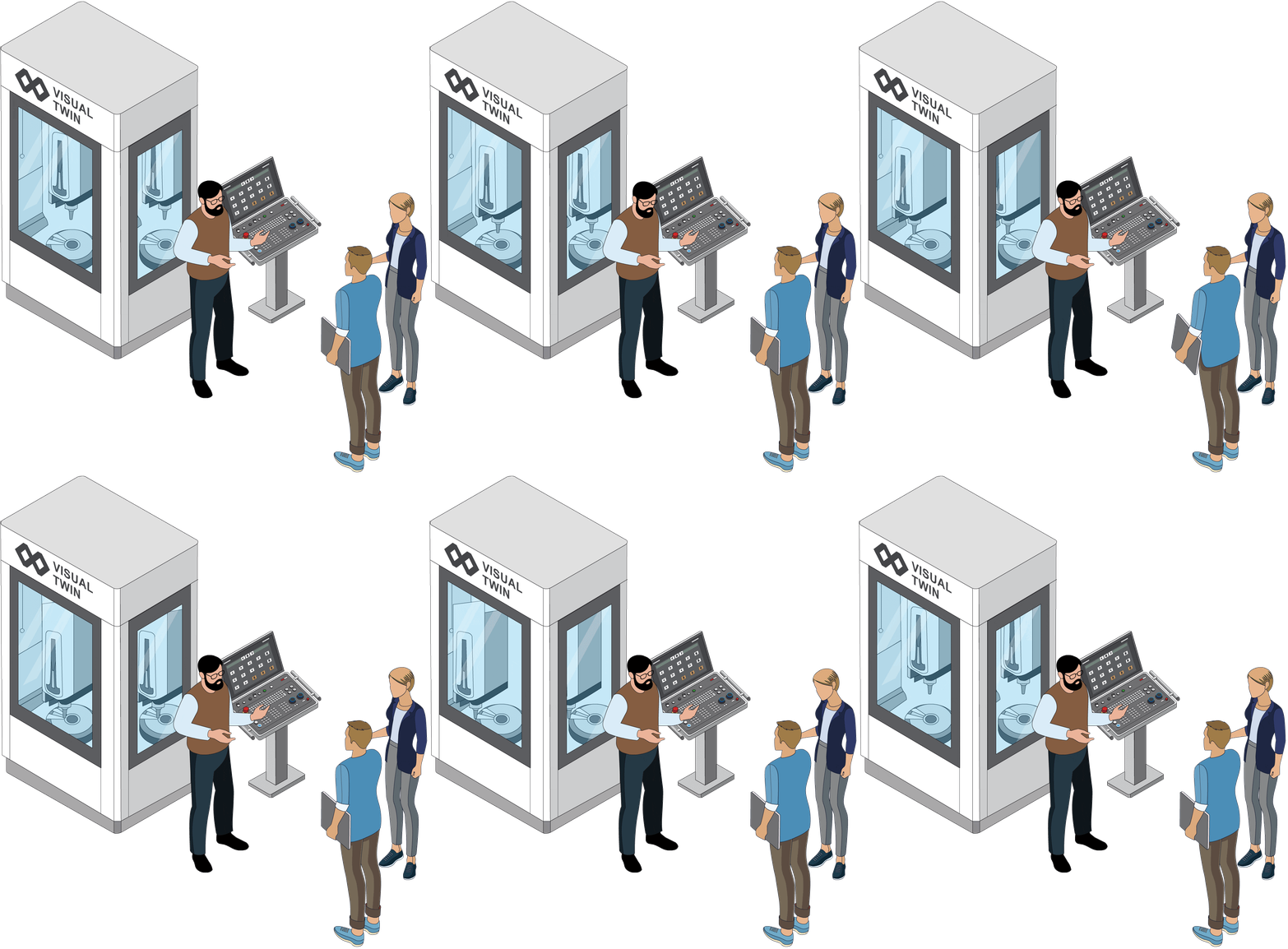
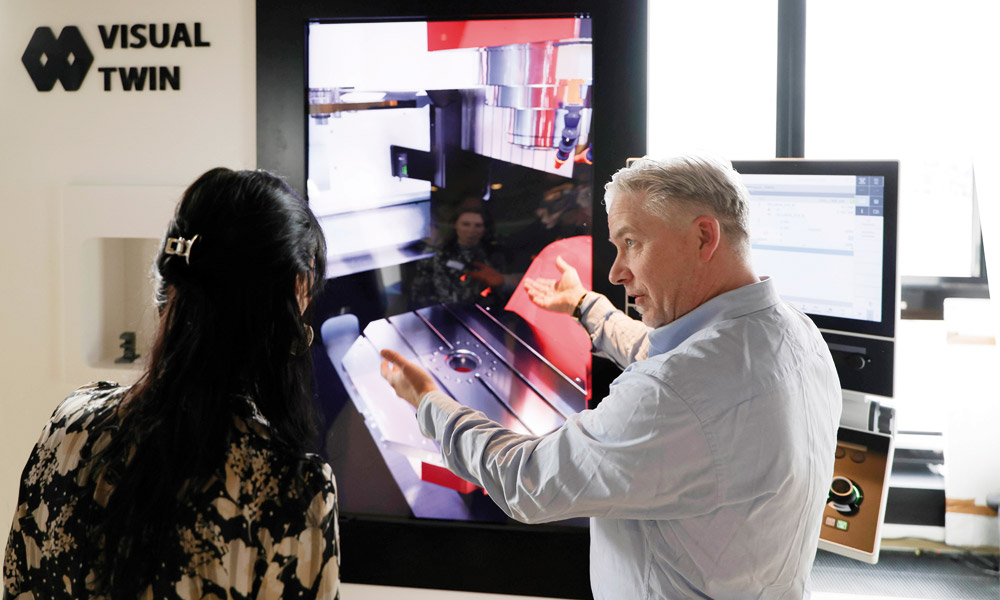
A Visual Twin is a photorealistic, real-time-capable digital representation of a machine tool that extends the digital twin concept with an interactive visualization layer, replicating machine kinematics, material removal, and machining processes in a manner virtually identical to the real system. The ModuleWorks solution combines physics-based real-time simulation with a direct connection to CNC controls, enabling the Visual Twin to run in synchronization with the physical machine. This allows operators to virtually test processes and machine functions before committing actual machines, tools, or workpieces; the Visual Twin also offers tangible added value for presentations where a physical machine is unavailable.
Visual Twin
Practical example: compressor blade
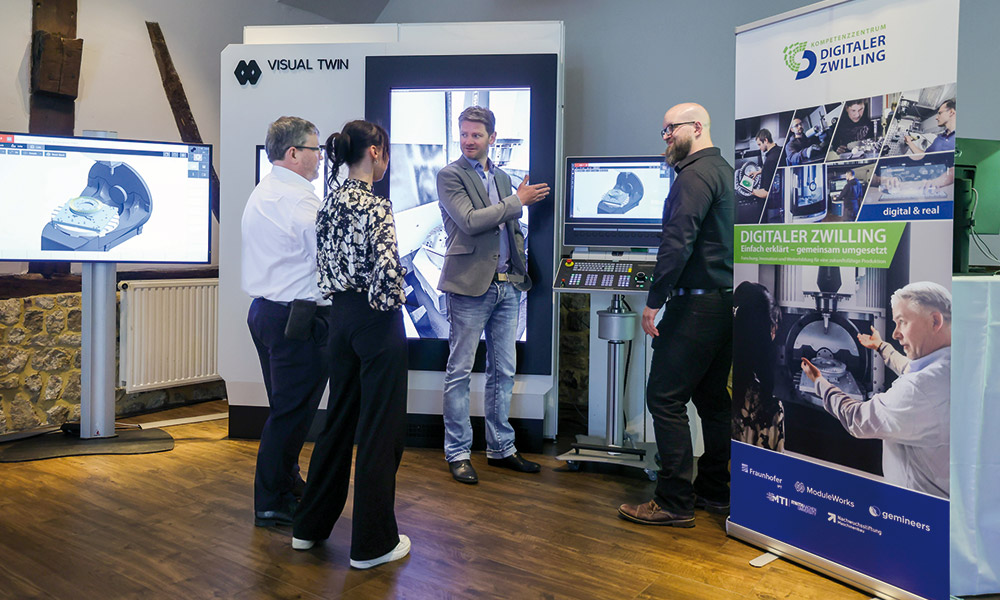
At Fraunhofer IPT, the Visual Twin is used to visually convey and demonstrate complex manufacturing processes for engine components such as blisks or impellers. The photorealistic visualization of multi-axis CNC machining processes makes it possible to virtually test NC programs and machining strategies before actual machine operation, as well as to identify critical tool-engagement scenarios involving thin-walled, safety-critical components at an early stage. Since engine components are manufactured from high-quality nickel-based or titanium alloys, this virtual pre-validation significantly reduces the risk of costly scrap. Furthermore, the Visual Twin allows the process knowledge gained to be clearly communicated to both technical audiences and decision-makers—even without a machine running—such as during industry presentations or project demonstrations.
Visual Twin
Practical example: Pinion shaft
At the MTI, the Visual Twin serves as a central teaching and demonstration tool for training and skills development in CNC machining. By simulating the production of a pinion shaft, students, apprentices, and professionals can virtually trace and interactively explore CNC machining processes—ranging from tool movement and material removal to machine dynamics—without tying up the actual machine or consuming tools and raw materials. This reduces training costs and enables risk-free familiarization with complex machine processes. At the same time, the Visual Twin at the MTI provides a research foundation for systematically investigating and further developing the effectiveness of virtual learning environments compared to conventional training formats.