Edge-cloud infrastructure
Edge-cloud infrastructure
Networking, data management, and provision of digital twins
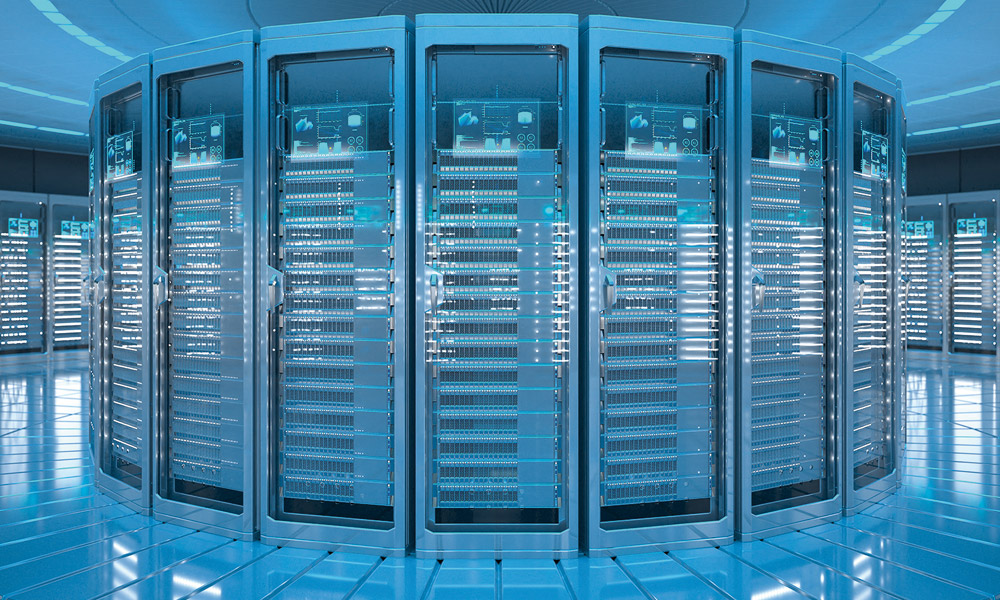
An edge-cloud infrastructure forms the technical foundation for data acquisition, transmission, storage, and processing in networked manufacturing environments, enabling the digital twin to consistently consolidate data from process simulations, machine data acquisition, tool management, and quality measurements. The architecture combines two complementary layers: the edge layer processes time-critical signals—such as vibrations or force measurements—directly on-site with rapid response times, while the cloud layer handles the centralized storage, management, and comprehensive analysis of all station data. Controllers, sensors, and IT systems (such as MES or ERP) are connected via standardized interfaces, with data security, access rights, and system availability serving as fundamental design principles.
Edge-cloud infrastructure
Practical Example: Industrial Data Management
Fraunhofer IPT operates a high-performance edge-cloud infrastructure that serves as the technical backbone for digital twins and data-driven manufacturing processes. Time-critical process data is processed via edge systems located in the immediate vicinity of the machines, while the cloud layer handles the centralized management, storage, and provision of data and services. The infrastructure relies on OpenStack for managing virtual machines, Kubernetes for orchestrating containerized applications, and Docker for running scalable software services. With a computing capacity of over 200 CPU cores, approximately 1.5 TB of RAM, and more than 270 TB of storage capacity, it provides the resources necessary for simulations, data analysis, and the operation of digital twins. Furthermore, standardized network zones and secure interfaces enable the protected integration of machine tools, sensor systems, and external research partners.
Edge-cloud infrastructure
Practical Example: Research Data Management
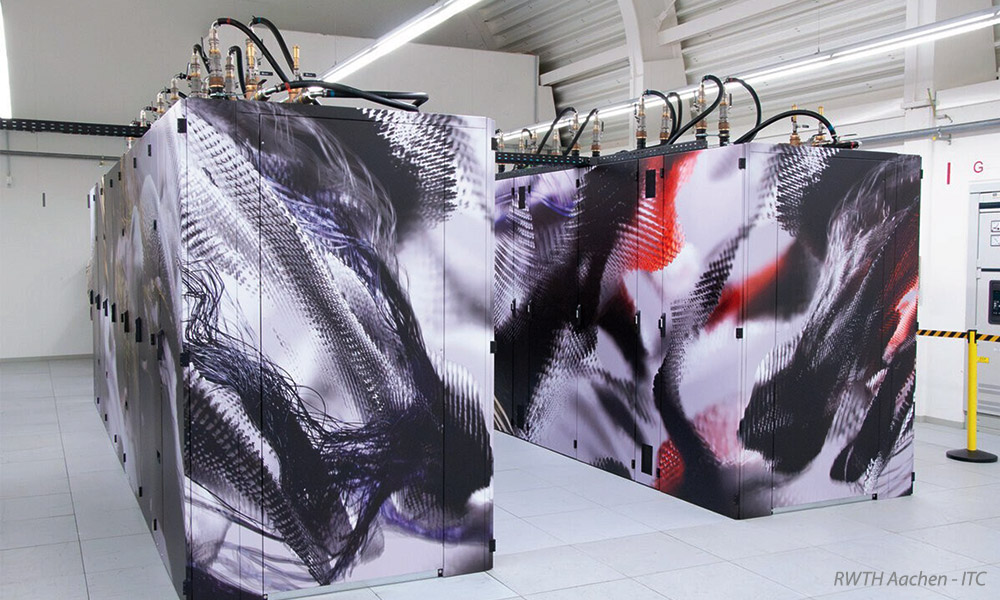
At the MTI, the demonstrator’s shared edge-cloud infrastructure creates a ready-to-use foundation for research into research data management. Ongoing operations generate heterogeneous datasets—including measurement data, simulation results, process parameters, and quality records—which are captured, processed, and made available via the shared infrastructure. This real-world data diversity enables the investigation of key scientific data management issues under authentic conditions: How can research data be consolidated in a structured manner and described consistently? How can the FAIR principles—Findable, Accessible, Interoperable, and Reusable—be implemented within a networked research infrastructure? In doing so, the MTI not only draws on its own infrastructure and edge-cloud resources but also utilizes high-performance resources within the RWTH network—such as the computing clusters provided by the IT Center—as needed. This allows concepts and tools for research data management to be developed and evaluated more rapidly, with greater practical relevance, and under realistic scaling conditions.