Processsimulation (CAM/CAE)
Processsimulation (CAM/CAE)
Virtual Validation of Manufacturing Processes
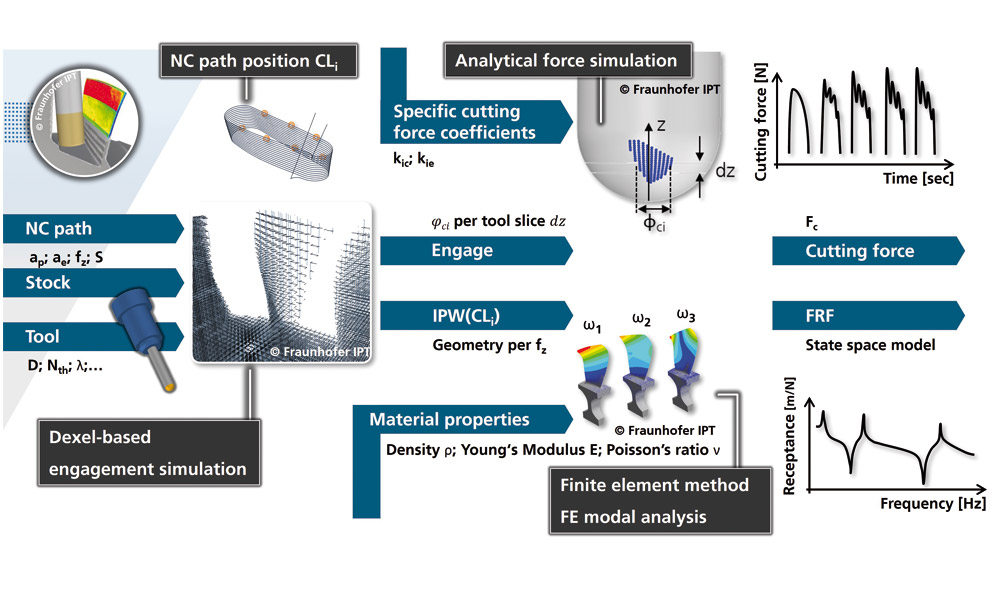
CAM-integrated process simulations (Computer-Aided Engineering, CAE) make it possible to virtually replicate machining processes—based on tool paths, technology parameters, and machine kinematics—and analyze them from both geometric and physical perspectives prior to actual machining.
Using physical models, factors such as mechanical and thermal loads, tool wear, component distortion, vibrations, and tool deflection can be identified at an early stage. This allows machining strategies to be precisely adjusted before costly setup trials on the actual machine become necessary.
Processsimulation (CAM/CAE)
Practical example: compressor blade
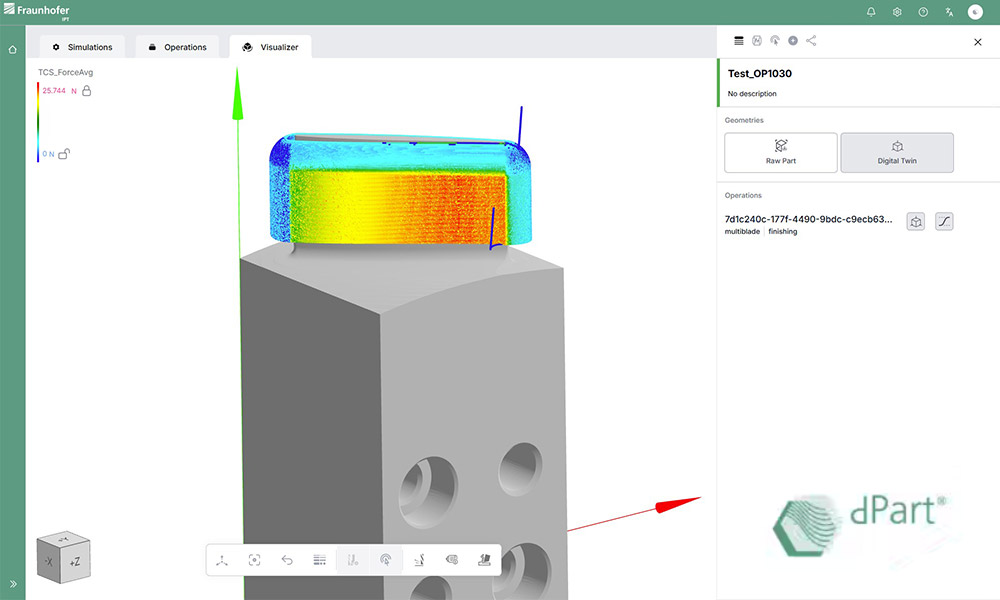
At Fraunhofer IPT, process simulations are specifically employed to plan and validate the machining of demanding aero-engine components. For complex parts such as blisks, impellers, or turbine disks, machining processes are tested virtually, machining strategies are compared, and critical engagement scenarios are identified before actual machining begins on the machine tool. This reduces scrap and setup effort, forming the basis for reliable and cost-effective production of safety-critical aerospace components. A scalable simulation environment for this task is dPart—a digital twin framework for machining based on a microservice architecture. It flexibly integrates various simulation and planning functions, enabling the structured acquisition, processing, and provision of process data. Additionally, AI methods as well as cloud and edge computing technologies are utilized to further analyze simulation results and optimize processes based on data.
Processsimulation (CAM/CAE)
Practical example: Pinion shaft
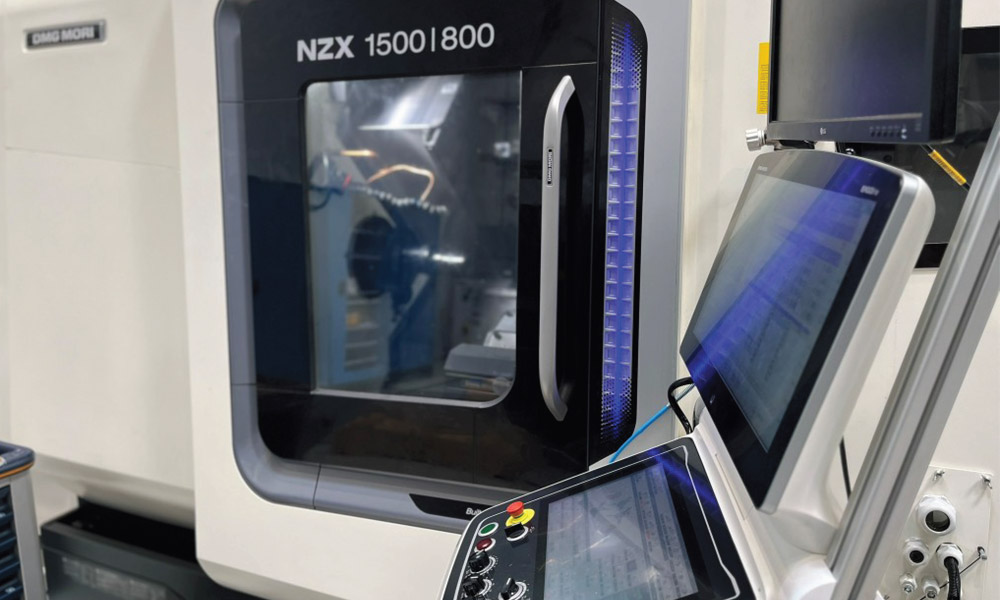
For high-precision, complex components involved in demanding manufacturing processes, MTI consistently employs CAM-based simulations for virtual process design. To maintain the research agility required for rapid response times, various approaches are considered: centralized planning within the CAM system, shop-floor-oriented methods, and machine-side programming. The appropriate approach is selected based on component complexity, process requirements, and the information available, ensuring a reliable manufacturing process design. The process always begins with the pre-defined 3D component data. This allows manufacturing processes to be designed according to specific needs without compromising the flexibility and rapid responsiveness essential to a research environment. In the specific use case of the pinion shaft, geometry-based programming was carried out directly at the machine.