Process Design & ramp-up
Process Design & ramp-up
Production Planning, Parameterization, and Ramp-up
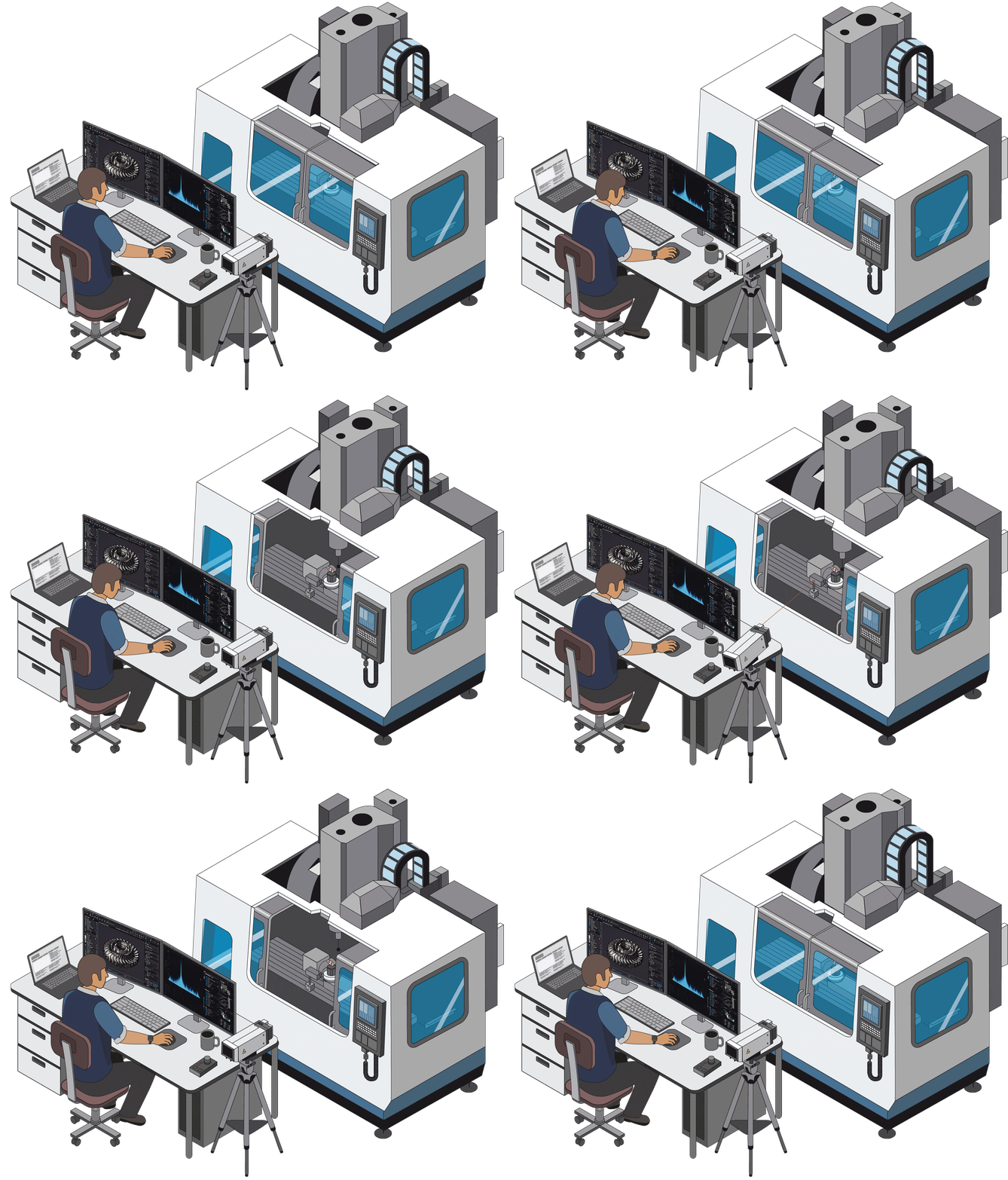
Process design and ramp-up refer to the transition from digital production planning to actual, stable, and reproducible machining operations. Technological parameters—such as spindle speed, feed rate, and depth of cut—are systematically fine-tuned to ensure a reliable, high-quality manufacturing process; this is particularly critical for safety-relevant components, where deviations directly impact part quality and process costs. Various measurement techniques and analysis methods are employed for validation and optimization; the resulting data is fed back into the digital twin, enriching it with real-world machine characteristics and thereby creating an increasingly robust foundation for process planning and serial production.
Process Design & ramp-up
Practical example: compressor blade
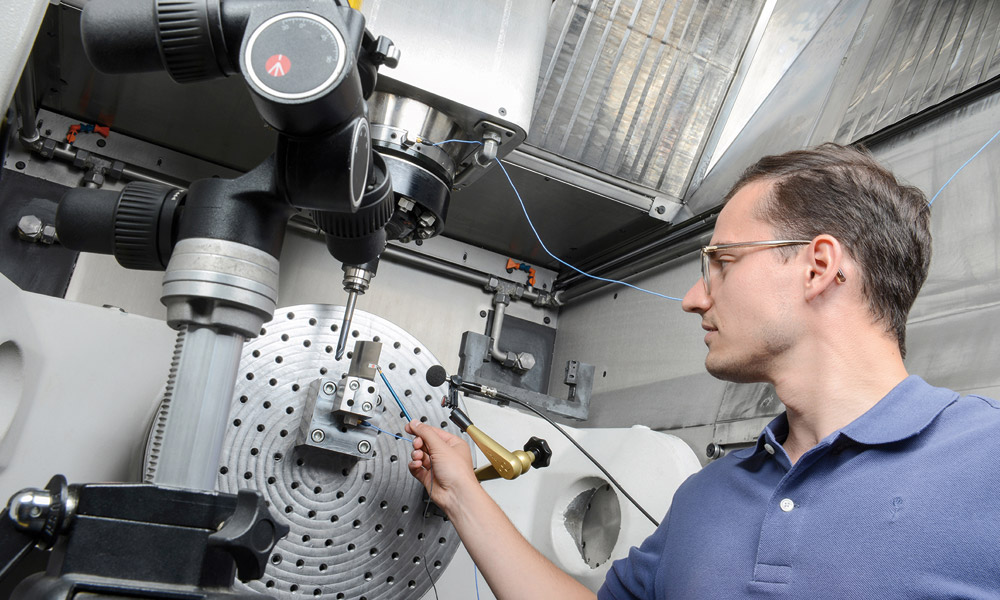
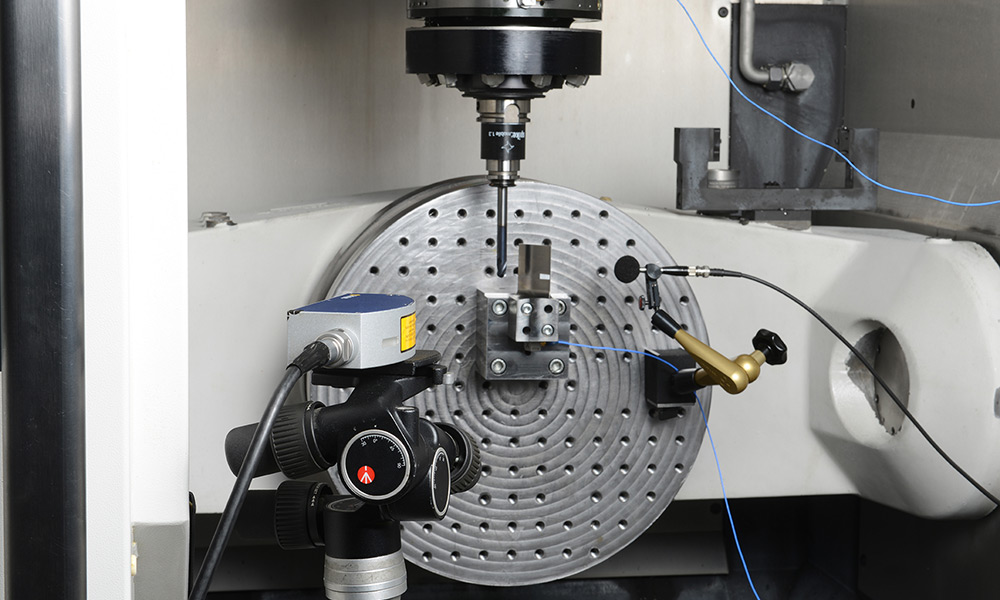
At Fraunhofer IPT, process design and ramp-up methods are specifically employed for the machining of demanding aero-engine components. Modal analysis plays a key role here; for thin-walled components such as blisks or impellers—which are subject to tight tolerances and stringent surface quality requirements—it enables a systematic and metrologically validated approach to bringing machining processes online. Modal analysis captures the dynamic vibration behavior of the entire system (machine, spindle, tool, and workpiece), allowing for the early identification of critical natural frequencies and potential chatter vibrations, while also taking the tooth-meshing frequency into account. The data obtained in this way form the foundation for stable, reliable, and reproducible manufacturing processes in the aerospace industry.
Process Design & ramp-up
Practical example: Pinion shaft
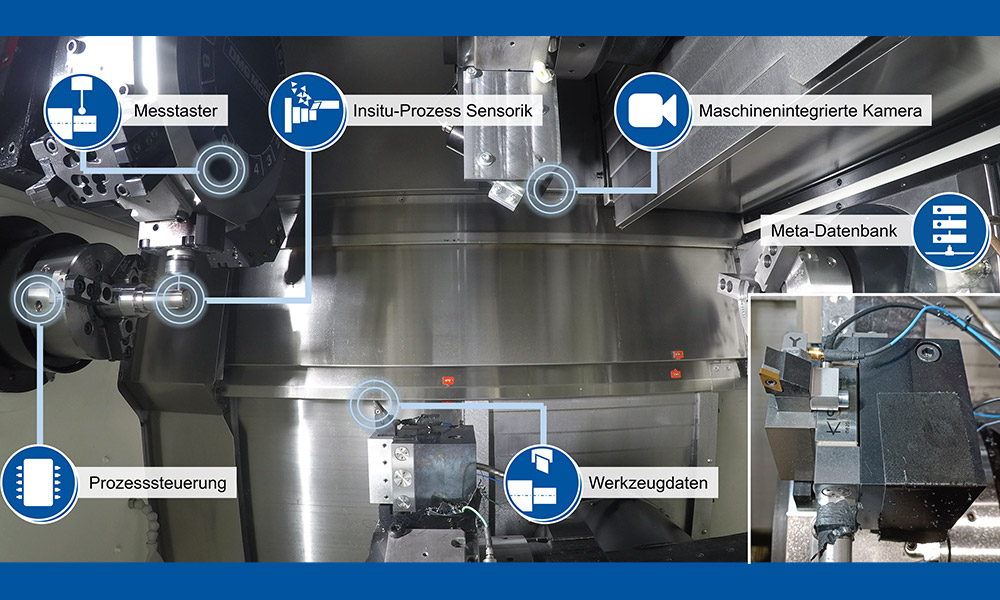
MTI possesses extensive expertise in the systematic planning and execution of empirical test series designed to configure and validate manufacturing processes across the entire production chain. Test plans are specifically tailored to relevant influencing factors, process parameters, and quality characteristics. Taking a pinion shaft as an example, parameters such as spindle power, cutting forces, vibrations, and temperatures can be recorded during the turning process. Depending on the specific objective, sensors and measuring equipment are either integrated into the machine tool or connected externally. Flexible data interfaces and modular systems within and on the machine enable testing to be conducted according to specific requirements. This allows process data to be systematically captured and analyzed, facilitating the generation of scientific insights and supporting the ramp-up of robust manufacturing processes.