Data Acquisition & Process Monitoring

Data Acquisition & Process Monitoring
Sensor Data, Digital Shadow, and Process Monitoring
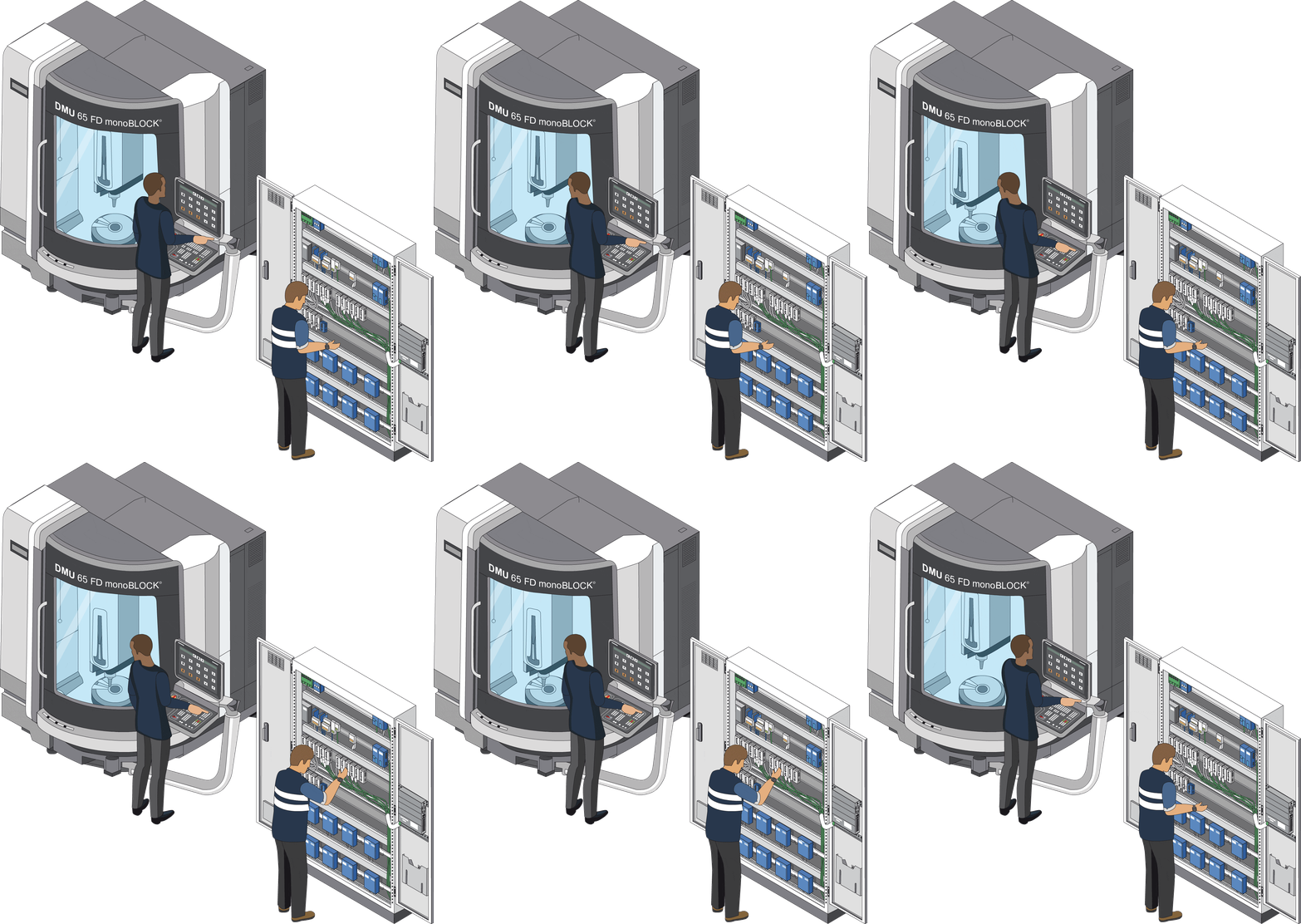
During machining, high-frequency process signals—such as motor currents, accelerations, temperatures, and structure-borne sound signals—are generated, reflecting the current manufacturing status in real time. Modern monitoring systems capture both internal and external machine signals, processing them using physics-based and AI-driven models. This enables the early detection of tool wear, tool deflection, and quality deviations before defective parts are produced. Digital documentation of every process and component ensures complete traceability and lays the foundation for continuous, data-driven process improvement.
Data Acquisition & Process Monitoring
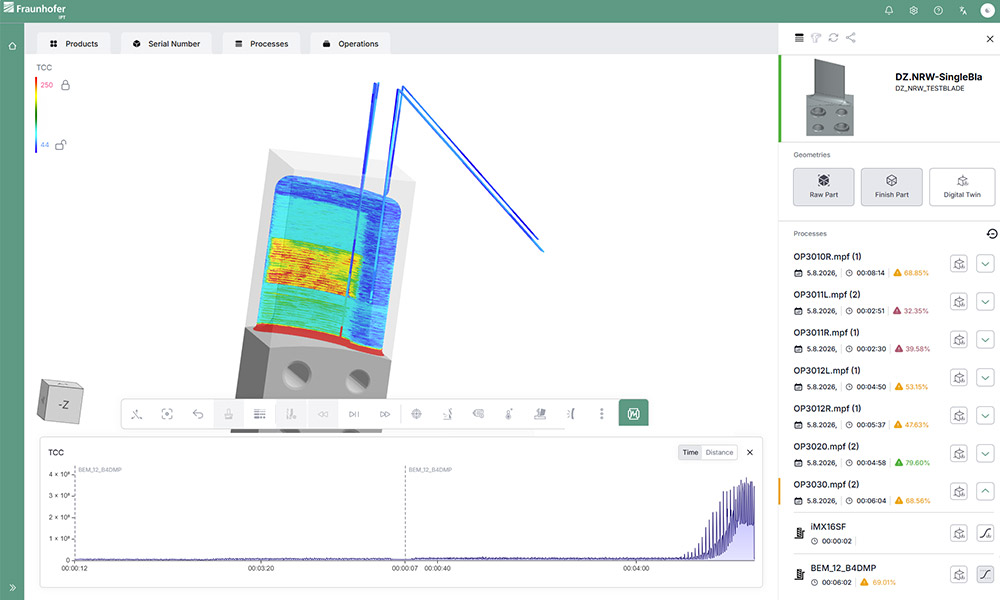
Practical example: compressor blade
At Fraunhofer IPT, machine data acquisition and process monitoring are specifically employed for the machining of safety-critical aero-engine components. In doing so, Fraunhofer IPT utilizes established market solutions from companies such as gemineers GmbH, Siemens, ARTIS MARPOSS, and CERATIZIT. During the machining of blisks, impellers, or turbine disks, continuous monitoring of process signals makes it possible to detect deviations at an early stage, reliably assess tool life, and verifiably document component quality. Consequently, data-based process monitoring contributes significantly to process reliability and quality assurance in aerospace manufacturing.
Data Acquisition & Process Monitoring
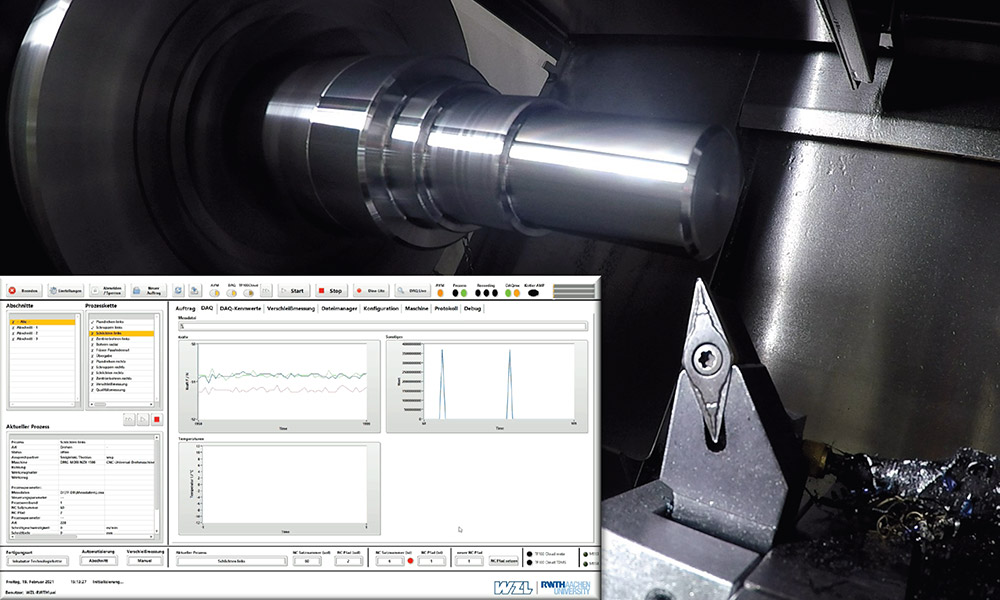
Practical example: Pinion shaft
The MTI combines systematic process data acquisition with active process monitoring to safeguard demanding manufacturing processes. Taking the turning of a pinion shaft as an example, process data are captured and analyzed during machining or immediately following individual machining sequences. This includes image and time-series data such as cutting forces, spindle power, vibrations, and temperatures. Segment-based analysis makes it possible to detect deviations at an early stage, evaluate process control in real time and in a targeted manner, and implement rapid-response measures to ensure secure process execution. This is particularly crucial for high-precision components with strict requirements regarding run-out and concentricity. The data obtained help ensure the required component quality and provide a robust foundation for downstream process steps and quality assurance measures. Active process monitoring also makes it possible to deliberately push into the extreme ranges of process control and test load limits within a research context.